
Stackable Knock-Down Filing Cabinet: 7 Principles for Modular Storage Growth
A stackable knock-down filing cabinet turns storage into a modular system: engineered top and bottom interfaces let one cabinet carry another, so capacity grows layer by layer while the KD flat-pack structure keeps sea freight cheap.
01What Is a Stackable Knock-Down Filing Cabinet
A stackable knock-down filing cabinet is a filing cabinet whose top and bottom carry dedicated locating and load-bearing structures, allowing one unit to sit stably on another and form a taller storage column — without buying a second full-height cabinet. Every layer is an independent cabinet that can be added or separated at will.
The keyword is modularity. A welded tall cabinet is locked at one height forever; a stackable unit behaves like building blocks, growing and shrinking as file volume changes. For overseas projects, that "stack as much as you need" ability avoids the twin problems of too little storage or wasted empty shelves.
02How Stacking Works: Structure and Load Paths
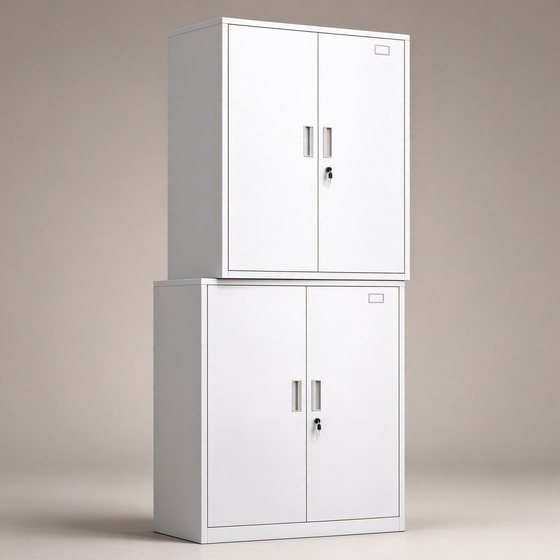
Cabinets do not stack safely by simply sitting on top of each other. A reliable stackable design is engineered around four structural details:
- Locating structure. Positioning pins, slots or stiffened folds on the top and bottom panels keep each module perfectly aligned, so the column cannot creep or slide.
- Load rim and ribs. A reinforced top frame with pressed ribs spreads the weight of the upper module and its contents evenly down to the base.
- Four-corner load path. The stack is carried by the corner posts, so all four corners must be genuinely rigid — no mid-panel sag.
- Anti-slip fixing. Optional clips or limit latches lock upper modules to lower ones against transport shock or seismic movement.
Load capacity is the specification that decides everything: shelf load, single-unit load and total stacked load should all be quoted by the supplier. Independent storage-unit tests such as the ANSI/BIFMA storage standards published by BIFMA are a useful benchmark when comparing quotes. Capacity always traces back to panel thickness and rib design — never judge by looks alone.
03Expandable Storage: Capacity That Flexes
The real value of a stackable filing cabinet is that storage volume becomes an option you can adjust at any time — not a one-time decision. A welded high cabinet bought too tall wastes its empty half; a stackable column simply splits, and the spare modules move elsewhere or go into store.
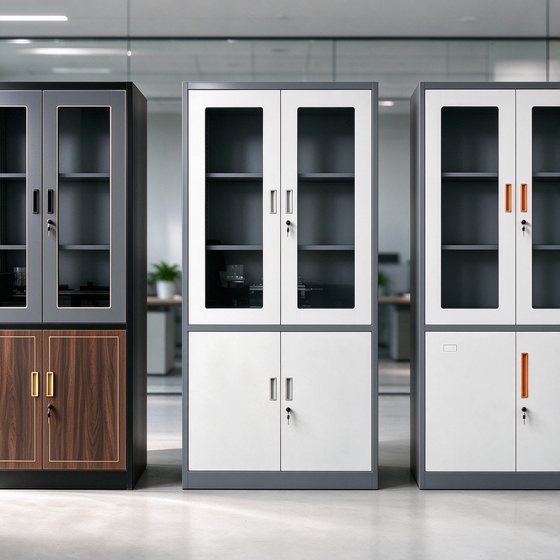
- Buy as you grow. One module today, another when files multiply — no oversized first purchase.
- Use the vertical band. Where ceiling height allows, columns go taller instead of wider, freeing floor area.
- Rearrange freely. Split the column and redeploy single modules when a room layout changes — no wrestling with a welded giant.
- Phase the budget. Fund the base layer now, add layers later; capital matches actual demand.
Many overseas projects ramp up storage gradually: install base modules at hand-over, then add layers as volume grows. For archive planning, national archive storage guidance — such as that published by the National Archives Administration of China — is a practical reference for forecasting capacity growth.
04Stacking Plus KD Flat-Pack: Two Advantages Multiplied
When a stackable module is also built as KD knock-down construction, the two advantages multiply for overseas buyers. KD solves the transport and installation cost; stacking solves the space and expansion flexibility.
| Comparison | Stackable KD Module | Welded Tall Cabinet |
|---|---|---|
| Capacity | Add or remove layers on demand | Fixed at factory height |
| Vertical use | Stacks as high as ceiling allows | Locked at delivery |
| Sea freight | Flat panels, dense loading | Bulky finished volume |
| Relayout | Splits and redeploys in minutes | Awkward to move |
| Budget | Phased, buy layers later | Full height up front |
| Best for | Growing demand, tight rooms | Fixed, one-off needs |
Shipping stays just as efficient either way: stackable modules travel as separate flat panels, so a column that stacks three high adds zero transport volume. Reorders are single-module top-ups that mix easily into shared containers. For how the panels themselves survive the voyage, see our guide to ocean shipping export packing standards for knock-down steel cabinets, and for the structural trade-offs see knock-down vs fully welded cabinets.
05Where a Stackable Filing Cabinet Fits
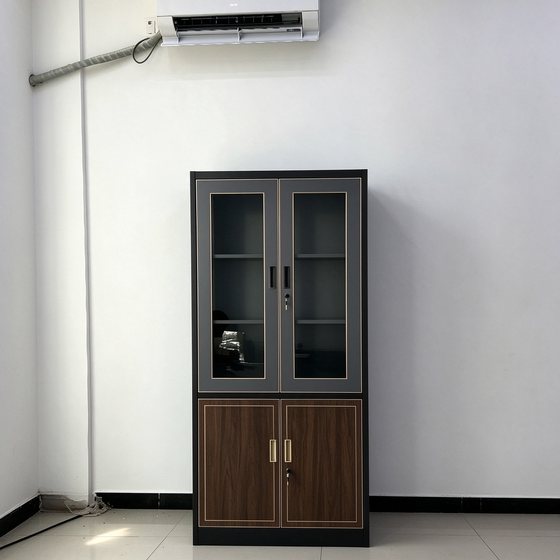
A stackable knock-down filing cabinet is not the best answer in every scenario, so match it to the need first. It suits projects where storage demand keeps growing, floor space is limited while vertical height is idle, the budget is phased, or layouts change often — typical of offices, schools, apartments and archive rooms.
If file volume is basically fixed, or ceiling height is too low for a second layer, a fixed-height cabinet may be simpler and cheaper. Work through four questions before deciding: Will volume grow? Does the ceiling allow stacking without blocking light or access? Can the site install and adjust layer by layer? Does the budget favor phasing? Answer these clearly and you will neither buy the wrong category nor pay for capacity you never use.
06Installation and Stability Checklist
Stacking is quick to install, but stability and safety deserve discipline on site:
- Level the ground first. Confirm the floor is flat and level adjustable feet before stacking, or the column will lean.
- Build bottom-up. Fix the base module, then add one layer at a time, checking each interface as you go.
- Verify engagement. Every layer's locating pins must be fully seated — no offset, no rocking.
- Respect the limits. Never exceed the stated maximum layers or total load rating of the stacked column.
- Anchor when tall. For higher columns or seismic areas, tie the top module to the wall with the supplied anti-tip fixings.
07Selection and Acceptance Points
Beyond ordinary filing cabinet criteria, buying a stackable module calls for extra checks on stacking-specific details:
- Load parameters. Get shelf load, unit load and maximum stacked layers in writing as the basis of selection.
- Interface hardware. Confirm real locating pins and reinforced rims — not a plain flat top.
- Panel thickness. Four-corner loading demands verified gauge and rib design.
- Trial assembly. Stack one set before bulk order to prove alignment and stability.
- Arrival check. After assembly, push-test each column for wobble before sign-off.
08FAQ: Stackable Filing Cabinet Questions Buyers Ask
How high can a stackable filing cabinet stack?
Will stacking crush the lower cabinet?
Which is more cost-effective: stacked modules or one welded tall cabinet?
Does stacking increase shipping volume?
Can stacked cabinets be used in seismic zones?
Get Your Modular Storage Plan
Shengmei Cabinet supports overseas office, school, apartment and archive projects with stackable knock-down filing cabinet supply, load calculation and phased expansion planning.
Suggested subject: Stackable Knock-Down Filing Cabinet | Modular Expansion Quote
Shengmei Cabinet · Stackable knock-down filing cabinet guide