

Printed Steel Cabinet Ink Durability: 7 Tests That Stop Fading & Scratches
How long does the print really last? This printed steel cabinet guide breaks down ink and printing process types, adhesion and weatherability principles, and the fade and scratch tests behind true printed steel cabinet ink durability — so buyers can verify quality before the order, not after arrival.
01Ink & Printing Process Types for Printed Steel Cabinets
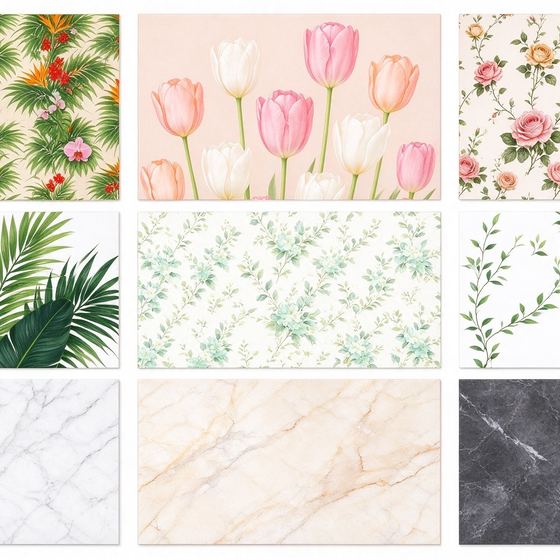
A printed steel cabinet earns its look from more than one process. "Print" is an umbrella term for several very different finishing routes, and their durability and cost are not the same. Choosing wrong at quotation stage is the root cause of most fading and scratching complaints later.
Plain powder coating gives the cabinet one solid color with no pattern — the most basic and mature surface treatment, with the color carried entirely by the powder itself. Heat-transfer printing starts from a powder-coated base, then transfers a wood-grain or stone pattern onto the coating at high temperature and seals it under a protective topcoat; this is the mainstream route for wood-look steel cabinets. Screen printing pushes ink through a mesh onto the surface and suits logos, simple graphics and lettering. UV printing sprays UV-curable ink that cures instantly under ultraviolet light, delivering fine detail and full multi-color artwork.
| Process | Character | Durability | Best For |
|---|---|---|---|
| Powder coat, solid color | One color, no pattern, mature process | Strong adhesion and wear life | Clean, uniform offices and warehouses |
| Heat transfer (wood / stone) | Natural pattern, moderate batch cost | Excellent with protective topcoat | Offices, apartments, schools seeking texture |
| Screen printing | Suits logos, graphics, text | Depends on topcoat | Branding and custom identification |
| UV printing | Fine detail, multi-color artwork | Wear-resistant once UV cured | High-precision multi-color custom work |
Cost, detail level and durability differ clearly between routes. Heat transfer looks natural and scales well in batches; screen and UV printing shine for logos and intricate patterns. Match the process to your artwork type and budget — and always ask what the process means for long-term durability.
02Adhesion and Weatherability: How the Coating System Works
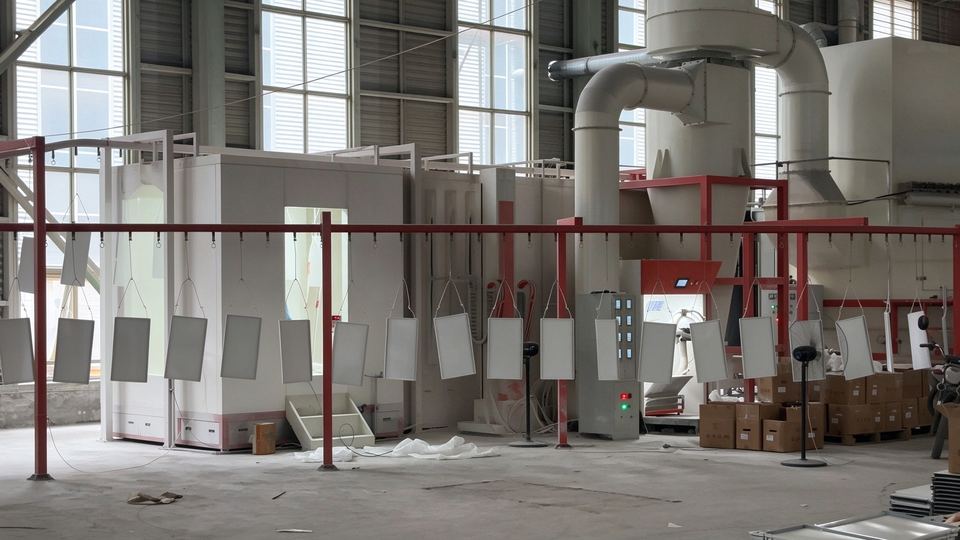
Whether the printed finish fades or scratches comes down to two things: how firmly the ink bonds to the steel (adhesion), and how well the coating shields that ink (weatherability). So an ink durability claim is really a claim about the whole coating system, not the ink alone.
- Adhesion. The print must lock onto the substrate; a weak bond peels at a light touch. Adhesion is set by primer quality, the transfer or printing process itself, and surface pretreatment.
- Protective topcoat. After printing, a transparent layer — clear powder or lacquer — seals the ink inside, guarding against scratches, UV and oxidation.
- Pretreatment. Phosphating after acid pickling gives the primer something to grip, so the print sits on a sound foundation instead of bare, untreated steel.
- Weatherability. The finished surface must keep its color through sunlight (UV), humidity and temperature swings without fading or chalking.
In short, print durability is a system: primer adhesion + ink adhesion + protective topcoat. One weak link always shows up sooner or later as fading or scratching. Judge the completeness of the whole coating system, never just how pretty the pattern looks on the showroom floor.
03Will the Print Fade? UV Factors and Light-Fastness Testing
Fading is the concern buyers raise first about any printed cabinet. Whether it happens — and how fast — is governed by a few factors, each with a matching test method.
- Ultraviolet exposure. Long-term direct sunlight is the main fading driver; outdoor or window-side installations face the highest risk.
- Ink light-fastness. Inks and transfer films carry different light-fastness grades; low-grade colorants bleach faster under UV.
- Protective topcoat. A print sealed under a clear layer resists UV noticeably better than one left open to light.
- Test standards. QUV accelerated weathering per ISO 4892 and light-fastness testing per the ISO 105 series expose the pattern to simulated UV and humidity, then grade the color change.
For indoor furniture the fading risk of the printed finish is controllable: interior light is weak and direct sun is rare. For window-side or strongly lit rooms, confirm the light-fastness grade of the pattern and that the protective topcoat is present. Chinese national standards — searchable in China's open standards system — mirror these ISO test methods if your tender cites GB references.
04Will It Scratch? Abrasion and Pencil-Hardness Tests
Scratching is the second worry. A marred print hurts looks, and a deep one can expose bare metal. Two laboratory tests put numbers on it:
- Taber abrasion. Per ASTM D4060, the coated surface is abraded for a fixed number of cycles; the loss of coating weight and any ink breakthrough grade the wear resistance.
- Pencil hardness. Per ISO 15184, pencils of increasing hardness are drawn across the surface; the hardest pencil that fails to scratch sets the coating hardness grade.
- The topcoat decides. Whether the print carries a wear-resistant clear layer is the single biggest factor in scratch performance.
- Usage frequency matters. High-traffic, frequently handled cabinets need a higher abrasion grade than static office storage.
For schools, dormitories and changing rooms, raise the scratch requirement accordingly — keys, bags and hard objects cross these surfaces daily. Confirm the print sits under a complete clear topcoat and ask for the Taber and hardness reports before ordering. Remember: abrasion resistance comes from the protective coating, not the pattern itself, so "is it topcoated" matters far more than "how deep is the print".
05How to Improve Print Durability Before Ordering
If your project is demanding — coastal humidity, strong window light, heavy daily use — put these requirements into the custom specification up front, so the factory builds to a higher grade instead of arguing at inspection.
- Reinforce primer and pretreatment. Complete acid pickling and phosphating with verified primer adhesion is the foundation of the whole system.
- Add the protective topcoat. A clear sealing layer lifts both scratch and UV resistance at modest cost.
- Specify high light-fastness ink. For bright locations, name the light-fastness grade of the ink or transfer film in the purchase contract.
- Strengthen corrosion protection for coasts. Printing never replaces anti-rust work; keep phosphating and powder coating intact and request salt-spray testing.
- Lock acceptance criteria. Write the adhesion, abrasion and light-fastness test standards and grades into the contract, then inspect against them on arrival.
Put durability requirements in the specification list and the factory produces to that grade from the first panel. For how the cabinet structure itself survives transport and assembly, pair this guide with our ocean shipping export packing standards, and for structure-versus-finish trade-offs see the knock-down steel cabinet vs welded comparison.
06Acceptance Inspection and Daily Care
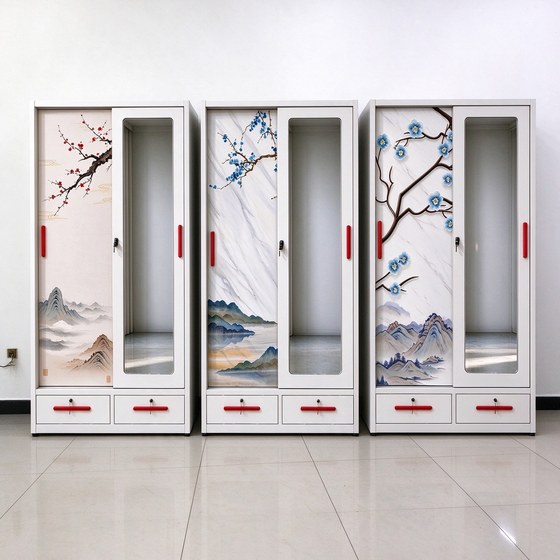
A few small habits at delivery and in daily use stretch the life of a printed cabinet noticeably.
- Inspect the surface. Check that the pattern is sharp, edges are clean, and there is no color loss, bare-metal show-through or scratching.
- Run a simple wear check. Wipe the print with a clean soft cloth — no ink transfer, no color on the cloth; draw a fingernail lightly across an edge to sense the hardness.
- Collect the reports. Ask for abrasion, hardness, light-fastness and adhesion certificates and match them to the contract grades.
- Care daily. Wipe with a soft cloth and clean water; avoid scouring pads, hard tools and strong acid or alkali cleaners; keep cabinets out of long-term direct sun.
- Prevent impact. The print layer is wear-resistant but not impact-proof — protect surfaces when moving cabinets or furniture.
07FAQ: Print & Finish Questions Buyers Ask
Will the print on a printed cabinet fade indoors?
Is the printed surface easy to scratch?
Is a printed cabinet less durable than a plain powder-coated one?
Does printing affect corrosion resistance in coastal areas?
How do I clean a printed cabinet without damaging the print?
Get Your Printed Cabinet Finish Plan
Shengmei Cabinet supports overseas office, school, apartment and archive projects with printed cabinet customization, ink process verification and sample printing — ready for domestic and overseas tender projects.
Suggested subject: Printed Cabinet Ink Process | Weatherability & Wear Plan
Shengmei Cabinet · Ink process & durability guide