
Moisture-Proof Knock-Down Filing Cabinet Tips for Clinic Archive
A practical guide to configuring moisture-proof knock-down filing cabinets for clinic and medical archive rooms — coating process, sealing, layout, and acceptance that protect paper records.
Clinics, pharmacies, and medical facilities keep large volumes of paper records — case histories, prescriptions, and lab reports — that are both legally sensitive and environmentally fragile. In humid, coastal, or rainy regions, paper molds and ink blurs while the steel cabinet itself rusts. A moisture-proof knock-down filing cabinet answers this with a complete coating process, tighter seals, and a knock-down structure that ships and stores easily. This article breaks down clinic archive moisture risks and the configuration points that keep records safe and dry.
1. Clinic Archive Storage Traits and Why Moisture Protection Matters
A moisture-proof knock-down filing cabinet is the right fit for clinic archives because clinic archives differ from ordinary office files in ways that make moisture control essential. Understanding these differences is the first step to choosing the right cabinet.
- High-value, long-retention records. Case histories and prescriptions are legal and medical evidence that must be kept for years; once water-damaged they are hard to recover.
- Paper fears humidity. Paper molds, sticks together, and loses legibility when damp — directly affecting lookup and compliance.
- Humidity swings. Coastal, tropical, and rainy regions keep ambient humidity high; an archive room without humidity control exposes both cabinet and paper.
- Steel rusts. A steel filing cabinet with weak coating will rust and peel in humid conditions, shortening its service life.
For a clinic archive, moisture protection is not a nice-to-have on the cabinet — it is a baseline requirement for record safety and cabinet longevity. The flat-pack furniture model also helps here: a knock-down (KD) furniture structure ships and stores flat, so clinics can stock spares without tying up floor space.
2. Key Surface Processes Behind a Moisture-Proof Knock-Down Filing Cabinet
The real difference between a moisture-proof knock-down filing cabinet and an ordinary one is whether the surface treatment is complete. Moisture resistance comes from a few specific steps.
- Full pre-treatment. A moisture-proof knock-down filing cabinet starts with steel that is degreased → pickled → phosphated and passivated, forming a tightly adhered phosphate film — the foundation of rust and moisture resistance.
- Electrostatic powder coating. Powder is electrostatically sprayed then cured at high temperature, producing a dense, well-adhered film that blocks water and salt mist.
- Adequate film thickness. Powder coating is typically around 60–80 μm (per product standard); enough thickness is what actually separates inside from outside.
- Sealing details. Door seams, joints, hinges, and feet are treated so moisture has fewer paths into the cabinet interior.
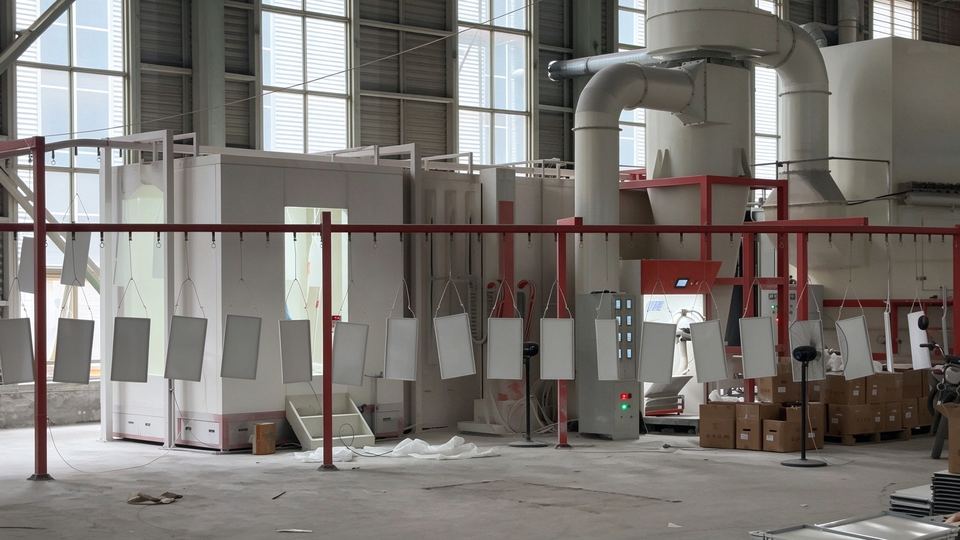
When sourcing a moisture-proof knock-down filing cabinet, confirm the supplier did complete acid-wash and phosphating plus electrostatic coating — not just the surface color. Low-price cabinets that skip pre-treatment will rust and peel within a season in humid rooms.
3. Moisture-Proof Cabinet Configuration Points
Configure a moisture-proof knock-down filing cabinet along several dimensions based on the actual archive room. The table below gives a reference.
| Dimension | Configuration | Why it matters |
|---|---|---|
| Coating process | Full pre-treatment + electrostatic powder coating | Foundation of rust and moisture resistance |
| Film thickness | 60–80 μm powder coat per standard | Thickness is what blocks moisture and salt mist |
| Sealing | Door seams, hinges, feet sealed | Fewer paths for moisture into the interior |
| Interior | Adjustable shelves, labeled frames | Organize records, reduce door openings |
| Hardware | Galvanized or stainless hinges and screws | Iron parts rust fastest in humid rooms |
| Locking | Lockable body, low cross-key rate | Secures confidential patient records |
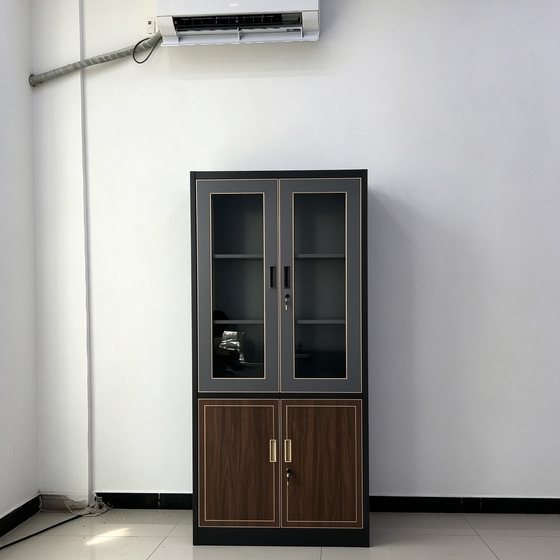
Moisture protection cannot rely on the cabinet alone. A moisture-proof knock-down filing cabinet blocks outside moisture and resists rust; dehumidification and ventilation control the room's overall humidity. Only the combination keeps records safe.
4. Cabinet Structure Paired with Archive Room Environment
A moisture-proof knock-down filing cabinet only does its job when paired with archive-room environmental management.
- Control room humidity. A moisture-proof knock-down filing cabinet needs the room humidity controlled: add a dehumidifier to keep relative humidity in a reasonable range (paper archives commonly around 40–60%; follow local norms) and reduce moisture outside the cabinet.
- Avoid wall contact. A moisture-proof knock-down filing cabinet should keep a gap between the cabinet and exterior walls or floor to reduce wall seepage and floor moisture.
- Ventilate and dust. Keep the archive room ventilated to stop humid air from settling; leave space above cabinets to avoid dust and damp buildup.
- Inspect regularly. Check coating, hardware, and record condition periodically; act early on any rust or damp signs.
5. Archive Classification and Interior Configuration
Clinic archives vary in type and size, so the interior of a moisture-proof knock-down filing cabinet should follow the record type to stay both moisture-safe and easy to manage.
- Medical records. Inside a moisture-proof knock-down filing cabinet, medical records are mostly A4; standard shelf cabinets with shelf spacing set to the record-box height give easy access.
- Prescriptions and lab slips. Thin and easily creased; use drawers or shallow compartments to avoid stacking pressure.
- Films and CDs. Moisture- and pressure-sensitive; use dedicated compartments or upright storage with drying protection.
- Confidential items. A moisture-proof knock-down filing cabinet keeps confidential items in a lockable body, kept separate, with electronic or low-cross-key mechanical locks.
- Labels and index. Label frames on doors or drawers speed lookup and reduce how often the door is opened (and moisture let in).
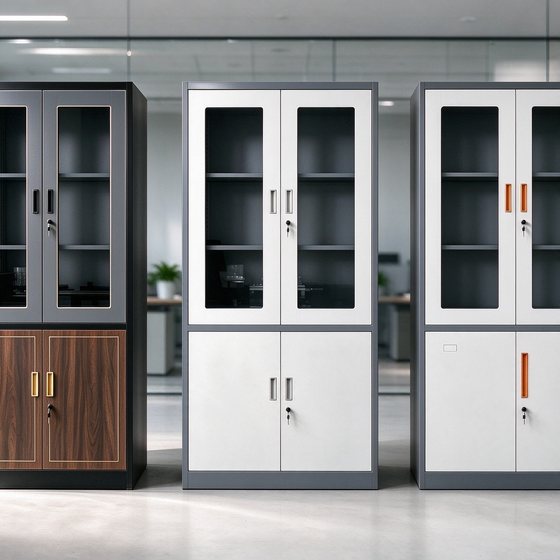
The closer the interior matches the record type, the more efficient the management and the less damage from repeated handling. Buyers can discuss interior customization with the manufacturer — shelves, drawers, and locks sized to the clinic's actual archive mix, instead of a "looks usable, feels wrong" standard cabinet.
6. Purchasing and Acceptance Essentials
When buying a moisture-proof knock-down filing cabinet, verify the moisture-related process and parameters — not just the appearance.
- Ask for a salt-spray report. Before buying a moisture-proof knock-down filing cabinet, require the supplier's salt-spray test (reference ISO 9227) to assess coating rust and weather resistance.
- Confirm pre-treatment. Verify acid-wash and phosphating were done — the core anti-rust step.
- Check hardware material. Confirm hinges and screws are galvanized or stainless; iron parts rust fastest in humid rooms.
- Confirm film thickness. Request coating-thickness data and verify it meets spec.
- Test-assemble and check seals. After assembly, check door seams and joints are flush and sealed, and that doors open smoothly.
For a clinic archive, a moisture-proof knock-down filing cabinet should be planned for "current plus future reserve" rather than just today's load. Clinic archive volume keeps growing, so prioritize core records (case histories, prescriptions) for moisture-proof cabinets and add secondary materials in batches; favor KD knock-down structure for high container load and easy reordering at lower bulk cost. Pair the cabinet with archive room log and label management so every record type has a fixed slot and index — moisture-safe and efficient. For overseas clinic projects, fold compliance, moisture protection, security, and cost into one plan so records are stored well and survive inspection.
7. FAQ
Strongly recommended in high-humidity, coastal, or rainy regions, paired with dehumidification. Dry areas can simplify, but pre-treatment must never be skipped.
The cost gap is mainly pre-treatment and hardware — limited. Against rust protection and record safety, the value far outweighs the small price difference.
Use both. The cabinet resists rust and blocks moisture; the dehumidifier controls overall room humidity. Together they protect records long term.
The cabinet mainly resists moisture and rust; paper mold is driven by overall room humidity, so it needs dehumidification to be effectively prevented.
Confirm salt-spray test, complete pre-treatment, and stainless hardware; keep the cabinet off the wall with a gap, and control archive-room humidity.
Shengmei Cabinet supplies moisture-proof knock-down filing cabinets, archive-room configuration plans, and salt-spray and moisture-standard verification for overseas offices, schools, apartments, and archive projects — with quoting for tenders.
Email subject suggestion: Clinic archive moisture-proof filing cabinet · Configuration plan