
Printed Knock-Down Steel Cabinet: 9 Customization Steps for Color, Pattern, Size & OEM/ODM
Introduction
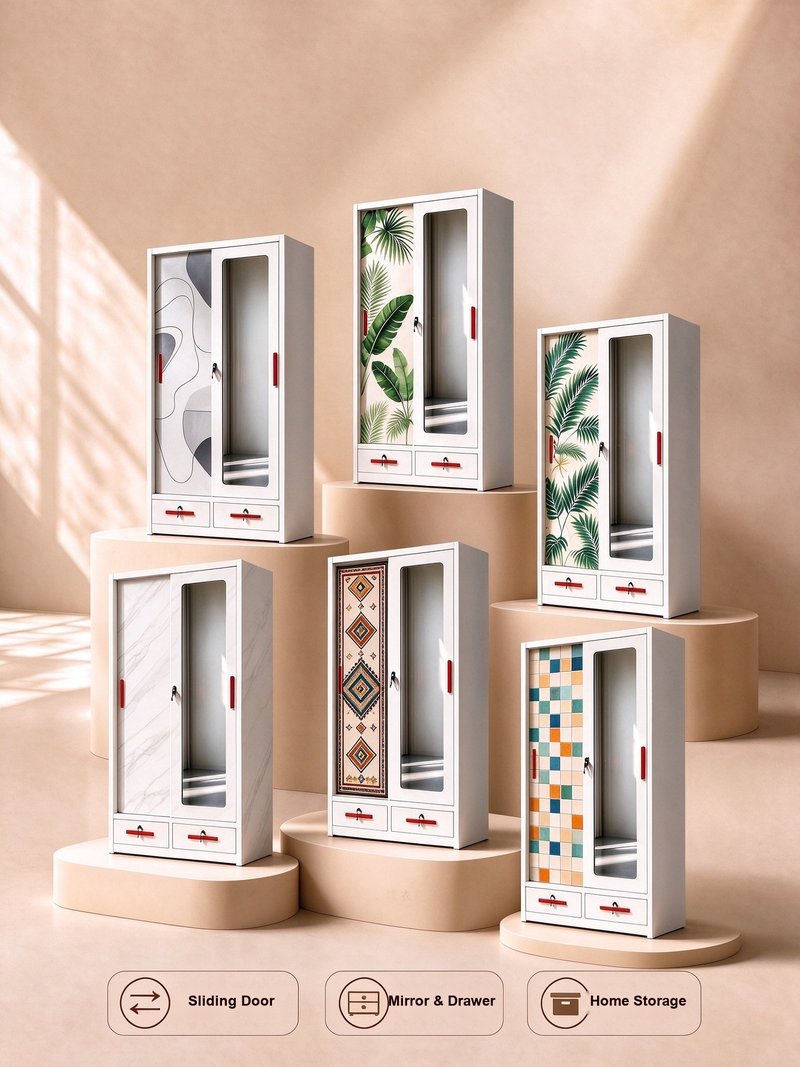
Overseas offices, apartments and school projects now ask more from a steel cabinet than a plain grey box. A printed knock-down steel cabinet (a knock-down steel cabinet with printed finish) uses wood-grain, stone-grain, two-tone and brand-logo printing to turn a practical cabinet into custom furniture, while keeping the low ocean-freight cost of KD construction. For importers and project buyers, this printed knock-down steel cabinet customization meets both brand aesthetics and logistics budgets, which is why it has become a mainstream choice for overseas projects.
This guide breaks down the customization dimensions, the OEM/ODM models, the printing processes, the sampling workflow and the common pitfalls, so overseas buyers can launch a custom cabinet project with fewer surprises.
1. What a Printed Knock-Down Steel Cabinet Customization Covers
Customization for these cabinets is not a vague promise. It lands on a few concrete, checkable dimensions that a buyer can confirm one by one.
2. OEM vs ODM Customization Models
Before a custom cabinet project starts, separate OEM from ODM. The two models carry different cooperation styles and supplier duties.
OEM — Original Equipment Manufacturing
You supply the drawings and specs; the factory builds under your brand. Best when you already hold mature drawings and clear specs but need a stable producer. The supplier's job is build-to-print, quality control and export support — the focus is "make it exactly as ordered."
ODM — Original Design Manufacturing
The supplier provides the design and development plan. Best when you only have a direction, for example "I need office filing cabinets with a wood look that can lock," and need the factory to land the design and structure. The supplier handles concept, sampling, structure optimization and mass production — the focus is "from idea to product."
Many overseas buyers mix both: ask the factory for an ODM sample first, then mass-produce under their own brand as OEM once the sample satisfies. This keeps design control and protects the brand. Choose by project stage and your own design capacity — there is no absolute better, only the right fit.
3. Customizable Dimensions of a Printed Knock-Down Steel Cabinet at a Glance
| Dimension | Options | Key Requirement |
|---|---|---|
| Color | Standard / Custom / Metallic | Lock Pantone or RAL; set color tolerance |
| Pattern | Wood / Stone / Two-tone / Geometric / Logo | Provide source file; confirm transfer process |
| Size | Width / Height / Depth | Provide space size; check load and structure |
| Internal | Shelf / Rod / Drawer / Lock | Define function; confirm drawing |
| Fittings | Lock / Handle / Caster / Damper | Specify brand or function; confirm fit |
For a deeper look at why KD beats welded builds on freight, see our guide on knock-down vs welded steel cabinets.
4. Printing Processes and Where to Use Them
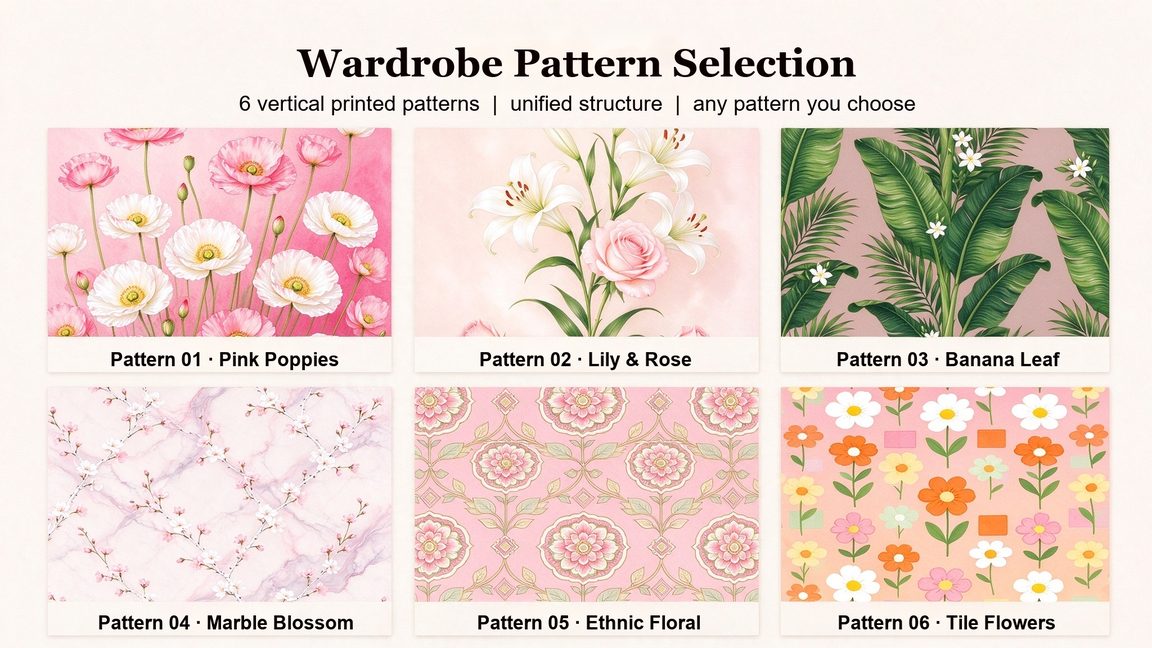
The "print" on a printed knock-down steel cabinet is not one process. Different patterns use different methods, with different cost and effect.
These processes differ sharply in steps, cost and MOQ: single color is cheapest, transfer adds steps and a higher MOQ, and logo printing depends on file quality and quantity. Pick by budget, project position and volume — do not chase complex prints blindly.
5. Printed Knock-Down Steel Cabinet Workflow: Sampling, Approval, Mass Production, Inspection
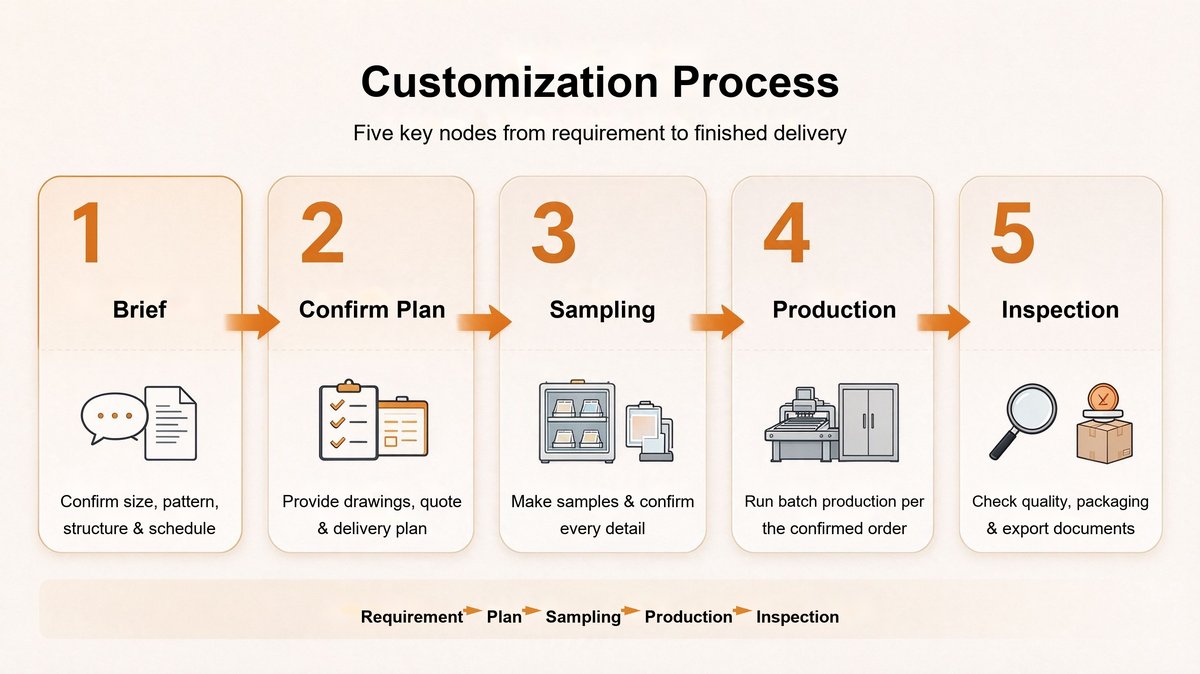
A printed knock-down steel cabinet order runs longer and has more steps than a standard item. Each step needs time and a confirmation gate to avoid mismatch with expectations.
Our new packing standard cuts export damage claims close to zero before containers leave.
6. Minimum Order Quantity and Lead Time for Custom Orders
A printed knock-down steel cabinet usually carries a minimum order quantity (MOQ), often starting at dozens of units; transfer and two-tone styles sit higher. Wood-grain, custom color and logo printing add steps, so MOQ and lead time rise — plan early.
Batch production takes several weeks plus ocean transit, so schedule with a buffer. Sampling runs a few days to a week; the faster the sample is approved, the more controllable the whole lead time. For freight planning, the World Shipping Council offers useful transit and container guidance. To compare Chinese OEM/ODM capacity, Made-in-China lists vetted steel-furniture factories.
7. Common Pitfalls and How to Avoid Them
The risky spots in a custom cabinet project cluster around color, pattern, structure and lead time. Avoid these early.
Color drift
Risk: no locked sample, bulk color shifts. Avoid: set a tolerance, keep a signed sample as the production and inspection baseline.
Blurry pattern
Risk: low-res source file blurs the print. Avoid: provide a high-res file, confirm transfer clarity, ask for a small proof first.
Weak structure
Risk: thinner steel for looks. Avoid: print affects only the surface, not the base plate — lock base thickness and load standard in the contract.
Late delivery
Risk: many steps and repeat sampling delay shipment. Avoid: buffer sampling + mass + sea time; write lead time and penalty in the contract.
Non-matching parts
Risk: custom hardware won't fit standard parts. Avoid: lock standard part models, build a spare-part list, stock spares.
8. How to Choose Colors and Approve Samples
Color and sample are the most visible and most repeated parts of a custom cabinet project. Practical tips for overseas buyers:
Use an international chart — specify RAL or Pantone numbers instead of "light grey" or "cream" to cut cross-language error. Confirm a tolerance (e.g. a ΔE range) so minor batch difference won't cause disputes. Always request a physical approval sample and view it under daylight and lamp light before scaling. Seal the approved sample as the bulk acceptance standard, and for split orders require later batches to match the first sample to avoid inter-batch color shift.
Beyond color, supplier reliability decides success. Custom printing involves repeat sampling and cross-language talk, so pick a source factory with a full print line (powder, transfer, silk-screen), willing to send a proof and write tolerance and acceptance into the contract, able to show base thickness, coating and eco-test proof, and familiar with export documents such as certificate of origin and test reports.
9. FAQ on Printed KD Cabinets
Is a printed knock-down steel cabinet pattern easy to peel off?
High-temperature transfer with a powder coating layer makes the print wear-resistant for normal use and long-term scenes.
OEM or ODM — which fits overseas buyers?
Pick OEM if you hold mature drawings; pick ODM if you only have a direction and need the factory to design. Mixing both is common.
Does printing clearly raise the unit price?
Printing adds steps over single-color powder, so the unit price rises a little; batch orders spread the cost and the custom look lifts product margin.
Will a printed knock-down steel cabinet fade or rust in humid sea freight?
The transfer pattern has a powder coating layer with good weather resistance; for coastal salt-spray projects confirm full phosphating plus coating and upgrade hardware and moisture-proof packing if needed.
How long is the lead time for a custom cabinet?
It depends on process and quantity: single color is faster than transfer, standard size faster than special shapes. Reserve sampling, mass production and sea time in three layers to avoid project delay.
Project Consultation for Printed Knock-Down Steel Cabinet
Shengmei Cabinet supplies printed knock-down steel cabinet customization, OEM/ODM plans, sampling and mass production for overseas office, school, apartment and archive projects, fitting domestic and overseas tender needs.
[…] reading on Shengmei Printed Knock-Down Steel Cabinet Knock-Down Steel Cabinet Packing Knock-Down Steel Wardrobe for Dormitory […]